Where is the term “bat” derived from?
Where Did the Pottery Term “Bat” Come From?
A surprisingly mysterious tale of clay, language, and a little bit of medieval vocabulary.
Every potter uses one. Every beginner buys one. Every instructor tells students to never ever try lifting a freshly thrown bowl without one.
But why on earth is this flat disc called a bat?
Is it because it flies off the wheel when you forget the pins? 🦇
Is it because it’s shaped like something Babe Ruth might swing?
Is it because pottery studios like to keep us guessing?
Well… sort of. Let’s dig into the history.
🏺 The Truth: The Origin of “Bat” Isn’t 100% Certain
Unlike many pottery terms with clearly documented roots, the word bat is a bit of a linguistic mystery. What we do know is that it comes from old English words connected to flat pieces, lumps, or tools used for striking—all of which actually make a surprising amount of sense.
Here are the three most likely origins:
1. From Middle English “Batte” — meaning a piece, lump, or chunk
This is one of the strongest theories.
In Middle English, batte could refer to a piece of material—including clay. Early potters sometimes worked with a flat slab of prepared clay, often called a clot, before placing it on the wheel. This slab was literally batted out into shape.
This same root survives in modern words like brickbat (a brick fragment).
So a pottery bat? Originally just a piece of clay, flattened out for use.
2. From “Batten” — meaning to fasten or secure
You’ve heard “batten down the hatches”?
A batten is something used to hold or secure materials.
Since modern pottery bats are secured to the wheel head with clay or pins, the leap from batten → bat isn’t far-fetched.
This theory fits especially well with modern wheel systems that rely on bat pins.
3. From Latin “Battuere” — meaning to beat or strike
This is the root of the English word bat (as in the thing you hit baseballs with). Over centuries, the term evolved to refer to anything flat, paddle-like, or used in a beating or flattening process.
Potters historically used paddles and flat tools when preparing clay, so the idea of a “bat” as a flat tool surface makes sense here too.
🎨 So Which Theory Do We Believe?
Here at Throw & Fire, we lean toward the practical, clay-covered explanation:
A bat was originally a flat slab of clay—batted or beaten out—to work on.
Over time, the word expanded to include any flat slab used to support pottery, whether made of plaster, wood, or modern plastics.
And that checks out with historical pottery definitions:
Bat (historical definitions):
- A flat slab of clay—sometimes called a clot—formed by hand or with a “batting” machine
- A thin piece of plaster or board used to place ware upon
- A kiln bat (kiln shelf) used to support ware inside the kiln
By today’s standards, though, we’ve modernized the definition:
🛠️ Modern-Day Bat (the one in your studio):
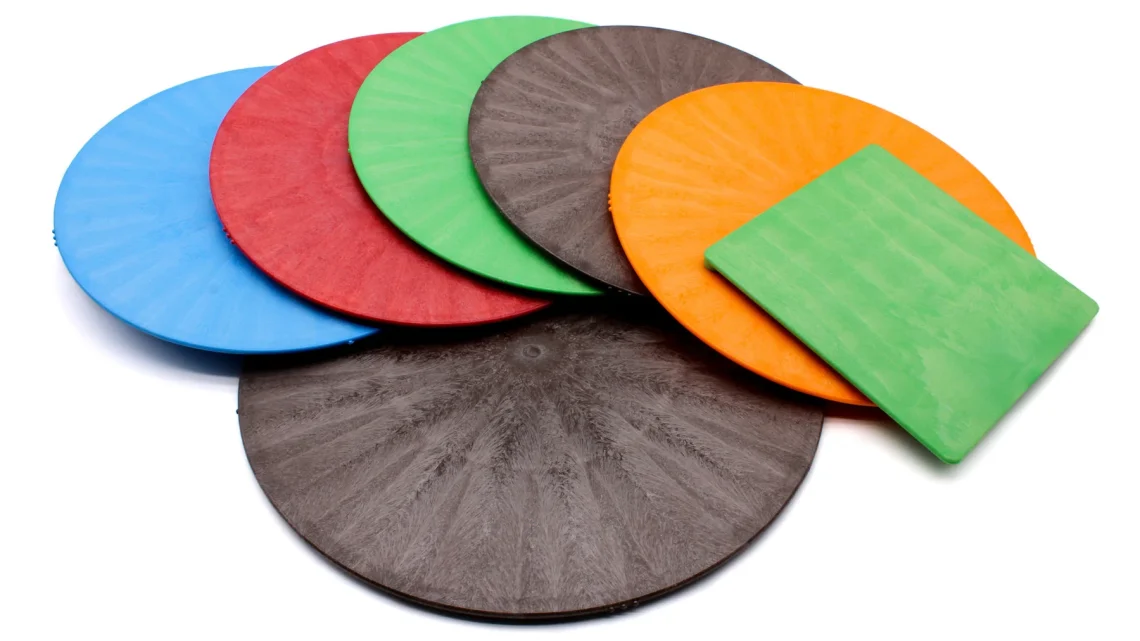
A flat disc made of plaster, wood, or plastic, attached to the wheel head with clay or bat pins.
Used for throwing pieces that would be difficult—or impossible—to lift directly off the wheel.
(Or for throwing five bowls in a row without cleaning your wheel head again. Let’s be honest.)
🌟 Final Fun Thought
Regardless of its exact medieval origin, the pottery bat is now a universal studio staple. It keeps our forms intact, our wheel heads clean, and our sanity preserved when throwing large or delicate pieces.
And while the word might have ancient roots, nothing feels more modern than grabbing a fresh bat, centering a lump of clay, and making something new.