Why Is It Called “Throwing” Clay? A Surprisingly Twisty History
If you’ve ever taken a pottery class, you’ve probably wondered: Why on earth do we call it “throwing” clay? After all, no one is literally chucking clay across the studio (hopefully).
The answer reaches way back into the roots of English — and it’s a fun little linguistic journey.
From Þrawen to Throwing
The word “throw” in the pottery world doesn’t come from tossing anything.
It traces back to the Old English word þrawen (pronounced thra-when), which later evolved into the Middle English forms thrawen and throwen. All of these ancient words meant something quite different from today’s “throw.”
They meant:
- to twist
- to turn
- to spin
- to turn around
- sometimes even to torque or work something into shape
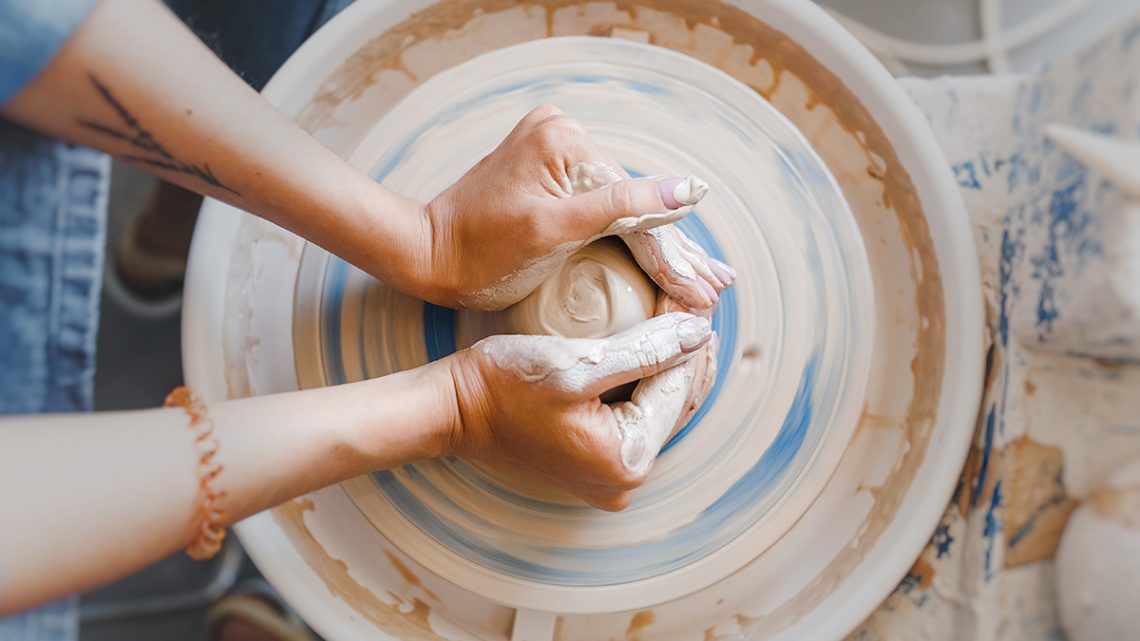
Sound familiar? That’s exactly what potters do when they center and shape clay on a spinning wheel — twisting, turning, and coaxing it into form with steady hands.
A Technique as Old as Civilization
Archaeologists have uncovered wheel-thrown pottery dating as far back as 3500 B.C., and possibly earlier. Pottery wheels were among the earliest “machines” humans engineered, and the twisting motion of forming clay on the wheel became closely associated with the act itself.
So over centuries, the original meaning of “to twist or turn” fused with pottery practice… and “throwing clay” became the phrase potters still use today.
A Word That Stuck (Like Wet Clay to a Bat)
Languages shift, but certain traditions stay timeless. While modern English now uses “throw” to mean “toss,” the pottery world kept the older meaning — and honestly, we’re glad it did. “Twisting clay on a wheel” just doesn’t have the same ring to it.
So next time you sit at the wheel, you’re not just making a pot —
you’re part of a 5,500-year-old tradition with roots deep in history and language.