We Threw Five Mammoth Clay Bodies — Here’s What Our Team Actually Thought
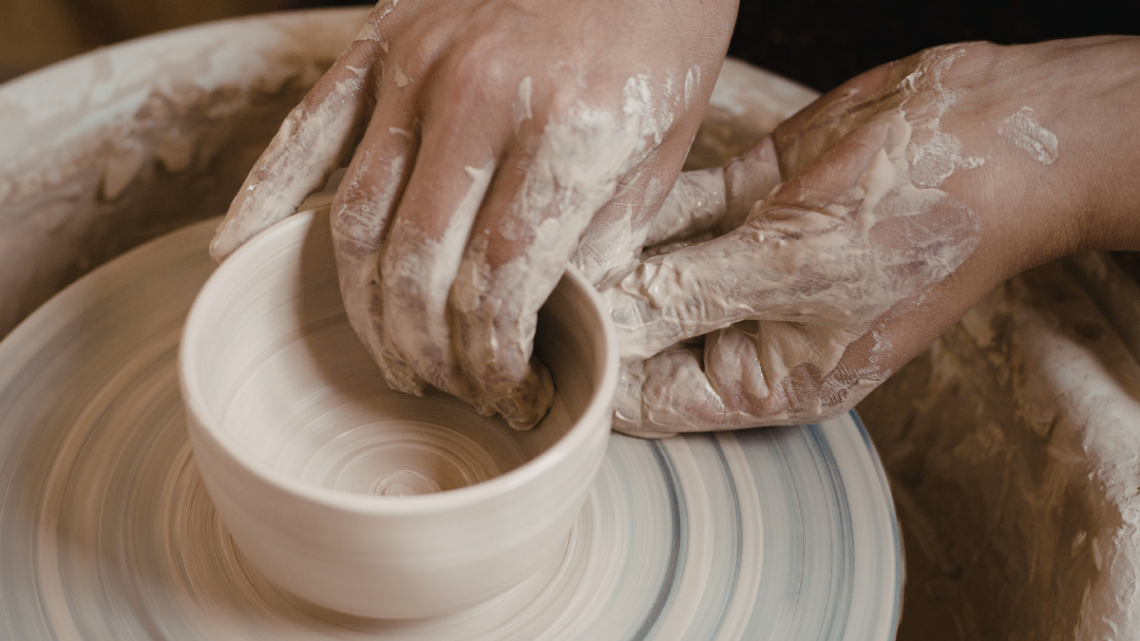
At Throw & Fire, “studio-tested” isn’t just a tagline. Before we recommend a clay to our customers, we put it on the wheel. We recently handed five Mammoth Clay bodies to two of our studio team members — Katie and Summer, both working ceramicists at Burst of Butterflies — and asked them to throw with each one and give us their honest take.
No marketing spin. Just real hands-on notes from people who throw every week.
Here’s what they found.
Mammoth Clay – Sharptooth (Mid-Fire)
What it is: A mid-fire stoneware with a slightly gritty texture. Fires to a warm, earthy finish.
Katie’s take:
“Very soft. Super sensitive to touch — easy to throw off center. A bit gritty. Holds structure well with little to no ripples when coning in. Slight cracking when pushing walls out. Probably good for big vases.”
Summer’s take:
“Strong. Holds up well and recovers well after mistakes. Hard to throw with but still great clay overall.”
The bottom line: Sharptooth has a split personality. Katie found it soft and reactive — great for large, open forms where you’re not fighting the clay, but it wants to go where you lead it, so precision matters. Summer had a different experience, finding it forgiving and resilient when things went sideways. The consensus: this is a solid mid-fire body for experienced throwers working on sculptural or large-vessel work. Beginners may find its sensitivity frustrating early on.
Best for: Large vases, sculptural forms, experienced hands.
Shop Mammoth Clay Sharptooth →
Mammoth Clay – A-Side (Mid-Fire)
What it is: A smooth, highly malleable mid-fire clay with no grit and strong elasticity.
Katie’s take:
“Super sticky and malleable. Can get really thin walls with no collapsing. Doesn’t like to come back in once pulled out. Super soft and no grit — still a bit like the Sharptooth, but I like it better. It seems really elastic. Good for sculpture.”
Summer’s take:
“Sticky and easy to mold. Pulling and centering was quick, but it absorbs water fast.”
The bottom line: A-Side is where Mammoth’s mid-fire line gets interesting. Both throwers noticed how fast it responds — centering and pulling come easily, and thin walls are achievable without the anxiety of collapse. The trade-off: it absorbs water quickly, so you’ll want to work with a lighter hand on the water and move efficiently. Once it’s out, it stays out — so plan your form before you commit. Katie actually preferred it over Sharptooth, which says something.
Best for: Sculptural work, thin-walled pieces, potters who like a responsive, elastic clay.
Mammoth Clay – Pearly (Low-Fire)
What it is: A smooth, low-fire clay body with a silky texture and porcelain-like feel.
Katie’s take:
“So soft. Reminds me of porcelain. I love this clay! Seems sticky and elastic, but probably hard to make cups with or tall forms. Love this one!”
Summer’s take:
“A little resistant. Harder to center and pull but holds strong. I pulled it thin and wide and then hugged it into a small narrow cup and it didn’t break or spiral or dent.”
The bottom line: Pearly produced the most divided reaction — and that’s not a bad thing. Katie was immediately drawn to its porcelain-like softness and fell in love with the feel of it. Summer found it more resistant on the wheel, but was genuinely impressed by how much abuse it could take: pulling it thin and wide, then collapsing it into a narrow form, and it held without cracking or spiraling. That’s real structural integrity in a low-fire body. If you’re used to porcelain or want that silky feel without the full commitment of true porcelain, Pearly is worth trying.
Best for: Decorative work, flat or wide forms, potters transitioning from porcelain, hand-building.
Mammoth Clay – L&R (Mid-Fire)
What it is: A mid-fire clay with moderate grit — sitting between Sharptooth and A-Side in texture — and strong structural stability.
Katie’s take:
“Way more stable. Doesn’t like to have thin walls and will ripple quickly. Easy to center. Good for a beginner potter! Softer than Sharptooth in the grit, but grittier than A-Side.”
The bottom line: L&R Mid-Fire is the approachable workhorse of the Mammoth mid-fire lineup. It centers easily and stays put — exactly what a newer thrower needs when they’re still building muscle memory and consistency. The trade-off is that it resists thin walls, so it’s not the clay for delicate or fine work. Think functional ware, classroom projects, and anyone who wants a forgiving mid-fire body without the sensitivity of Sharptooth or the elasticity of A-Side.
Best for: Beginner to intermediate throwers, functional ware, classroom use.
Mammoth Clay – L&R (Low-Fire)
What it is: The low-fire counterpart to L&R Mid-Fire, with similar handling characteristics and excellent stability.
Katie’s take:
“Same as the mid-fire version. Would be good for classes and hand-building. Pretty stable.”
The bottom line: If L&R Mid-Fire is a reliable classroom workhorse, L&R Low-Fire is its counterpart for programs using low-fire kilns or working with younger students. The same ease of centering and structural stability carries over, and Katie’s instinct about hand-building is worth noting — its predictability makes it well-suited for slab work, coiling, and pinch projects where wheel sensitivity isn’t the point. A strong candidate for school programs and studio introductory classes.
Best for: Hand-building, classroom programs, beginners, low-fire studio setups.
Quick Comparison
| Clay | Feel | Best Use | Skill Level |
|---|---|---|---|
| Sharptooth (Mid-Fire) | Soft, slightly gritty, reactive | Large vases, sculptural forms | Intermediate–Advanced |
| A-Side (Mid-Fire) | Smooth, elastic, sticky | Sculpture, thin-walled throwing | Intermediate–Advanced |
| L&R (Mid-Fire) | Moderate grit, stable, forgiving | Functional ware, classroom throwing | Beginner–Intermediate |
| Pearly (Low-Fire) | Silky, porcelain-like | Decorative, wide forms, hand-building | All levels |
| L&R (Low-Fire) | Stable, predictable | Hand-building, classroom programs | Beginner |
Want to Try Mammoth Clay?
All five of these clay bodies are available at Throw & Fire with local pickup in Chandler and Peoria, or shipped anywhere in Arizona. Bulk discounts apply automatically on larger orders.
Have questions about which body is right for your studio or classroom? Give us a call at 480.559.8019 or reach out through our contact page — we’re happy to talk clay.