What Cone Should I Fire To? A Beginner’s Guide to Kiln Cones
If you’re new to pottery, kiln cones can feel like an entirely different language. Cone 06? Cone 5? Low fire? Mid-range? Why are there numbers and letters?
You’re not alone—and the good news is that kiln cones are far less intimidating once you understand what they actually measure and how they relate to your clay and glaze.
Let’s break it down.
🔥 What Is a Kiln Cone?
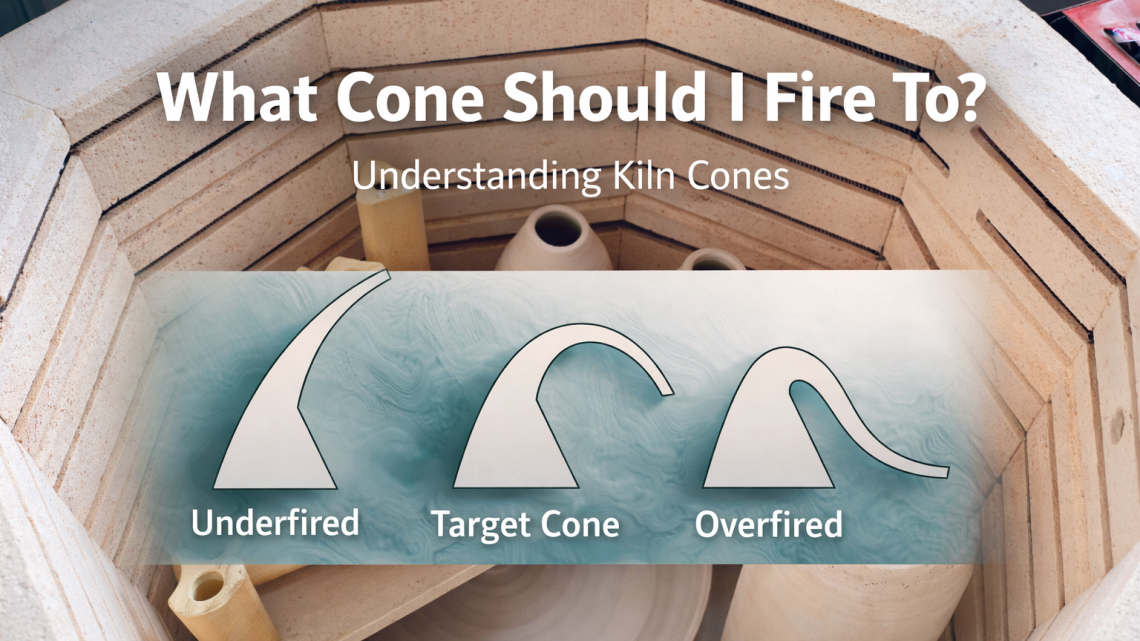
A kiln cone is a small pyrometric tool that measures heatwork—not just temperature, but the combination of temperature and time inside the kiln.
When a cone bends, it tells you that your kiln has delivered the correct amount of heat for that firing.
👉 Important:
Two firings can reach the same temperature but produce different results depending on how fast or slow the kiln heats.
🔢 Understanding Cone Numbers
Here’s the part that trips most beginners up:
- Lower numbers = lower firing temperatures
- Higher numbers = hotter firings
- Cones with a leading zero (like 06) are lower than cone 1
Common Cone Ranges:
- Low Fire: Cone 06–04 (great for decorative items)
- Mid-Range: Cone 6 (most common for food functional items)
- High Fire: Cone 9–10
🏺 Which Cone Should You Use?
Low Fire (Cone 06–04)
Best for:
- Bright, decorative glazes
- Many beginner classes
- Some earthenware clays
Pros:
- Vibrant colors
- Shorter firing times
Things to know:
- Not always food-safe
- Less durable for functional ware
Mid-Range (Cone 5–6) ⭐ Most Popular
Best for:
- Stoneware pottery
- Functional mugs, bowls, plates
- Studio and home kilns
Pros:
- Strong, durable results
- Food-safe when glazed properly
- Huge glaze selection
If you’re looking to purchase clay for your kiln firing range, visit our guide on where to buy pottery clay in Arizona.
High Fire (Cone 9–10)
Best for:
- Traditional reduction firing
- Advanced ceramic work
Things to know:
- Requires specialized kilns
- Fewer commercial glaze options
- Not beginner-friendly
🧱 Clay + Glaze Must Match
One of the most common beginner mistakes is mixing firing ranges.
🚫 Low-fire glaze on mid-range clay = problems
🚫 Mid-range glaze on low-fire clay = worse problems
✔ Always check:
- Clay firing range
- Glaze firing range
- Kiln firing schedule
If they don’t match, don’t fire it.
🔥 What About Bisque Firing?
Most pottery is fired twice:
- Bisque Fire
- Usually Cone 04
- Turns clay into ceramic
- Makes it porous for glazing
- Glaze Fire
- Matches your clay & glaze (often Cone 5–6 for mid-fire stoneware and 05-06 for low-fire earthenware)
🧠 Beginner Tip
If you’re unsure:
- Ask before firing
- Test small pieces
- Keep firing notes
And if you don’t have access to your own kiln…
👉 That’s where we come in with Reliable Kiln Firing Options In Arizona for Every Potter
🏺 Firing at Throw & Fire
We work with a wide range of beginner and intermediate clay bodies and glazes and can help guide you to the correct firing range.
Whether you’re firing:
- A first mug
- A class project
- Or a studio batch
We’re happy to help you fire with confidence.
Kiln cones aren’t something to fear—they’re simply your kiln’s way of speaking to you.
Once you understand cones, you unlock consistency, durability, and better results in every piece you make.